Loading live prices…

Author: CryptoChris

  • What Is a Contract Address (CA) in Crypto?

    What Is a Contract Address (CA) in Crypto?

    A Beginner’s Guide to Verifying Meme Coins


    DIFFICULTY: BEGINNER

    If you’ve spent any time in meme coin communities, you’ve seen it: a long string of random letters and numbers, usually labeled “CA.” People treat it like sacred text — pasting it in every reply, demanding it before they’ll even look at a chart.
    That’s not hype. It’s the single most important habit in meme coin trading. Here’s why.

    cryptochris trades with terminal banner


    What Is a Contract Address (CA)?


    A contract address (CA) is the unique, permanent identifier for a token on the blockchain. It’s a long string of letters and numbers — something like 7xKXtg2CW87d97TXJSDpbD5jBkhNeSjeE3Kkgz3jkcT on Solana — generated the moment a token is created.
    Think of it like a serial number stamped into the token at birth. The name “Doge Killer 3000” and the ticker “$DK3K” are just labels — anyone can slap those same words on a brand-new, completely unrelated token five minutes later. The contract address can’t be faked or duplicated. It’s the one thing that actually points to this specific token and nothing else.
    What Is a Contract Address (CA) in Crypto - CryptoChris Blog


    Contract Address vs. Wallet Address — Don’t Mix These Up


    This trips up a lot of beginners, so it’s worth spelling out clearly:
    • A wallet address is where you (or anyone) hold assets. You send crypto to it.
    • A contract address identifies a token, not a person. You don’t send funds “to” a CA — you use it to look up, verify, and buy a specific token.
    They look identical at a glance — both are long strings on the same blockchain — which is exactly why confusing the two, or pasting the wrong one, causes real losses.
    solfarmer banner 1


    Why the CA Matters So Much for Meme Coins


    Meme coins are especially exposed to a specific trick: name and ticker impersonation.
    Because anyone can launch a token in minutes on platforms like pump.fun, it’s trivial to copy a trending coin’s exact name, ticker, and logo, and launch a fake version seconds after (or even before) the real one takes off. Traders searching by name land on the impostor, buy in, and hold a worthless token while the real one runs.
    The contract address is the only thing that cuts through this. Two tokens can share a name, a ticker, and a profile picture — but they cannot share a CA. If you only remember one rule from this guide, make it this one:
    Golden Rule
    Never trust a name, ticker, or logo. Always verify the exact contract address across at least two independent sources before you buy.

    How to Find the Correct Contract Address


    Before you can verify anything, you need the CA in front of you. Common places to get it:

    1. The project’s official channels — pinned messages in their Telegram/Discord, or their verified X (Twitter) account bio or pinned post.
    2. On-chain explorers — Solscan (Solana) or Etherscan (Ethereum) let you search a token name and inspect its contract details, creation time, and holder list.
    3. Trading terminals — DEX Screener and pump.fun show the CA directly on a token’s chart page.
    4. Aggregators — CoinGecko or CoinMarketCap list a verified CA for tokens that meet their listing criteria (mainly useful for more established coins, less so for brand-new meme launches).
      Never rely on a single Telegram message, a random reply-guy comment, or a screenshot for your CA. All three are common places scammers plant a swapped address.
      How to Verify a CA Before You Buy
      Once you have a CA, confirm it’s the real one:
    5. Cross-check at least two sources. If the project’s X bio and their pinned Telegram message show the same CA, that’s a good sign. If they don’t match, stop.
    6. Paste it into a block explorer. Solscan will show you the token’s creation date, deployer wallet, and holder distribution — useful context on its own, and a chance to catch a typo before it costs you.
    7. Check contract age against the hype. A CA that was created months ago being passed around as a “brand-new launch” is a red flag for a stale or unrelated token.
    8. Run it through a scanner. Tools like Honeypot checkers or contract scanners flag tokens with malicious code — such as a “honeypot” that lets you buy but blocks you from selling.
    9. Match it to your other screening steps. If you already run a four-check framework for sniper wallets or pull up a token’s market cap, do it against the verified CA — not the first address you were handed.
      The #1 Real-World Scam: Clipboard Hijacking

    Here’s a risk that catches even experienced traders off guard. Certain malware sits quietly on an infected device and watches your clipboard. The moment you copy a contract address to paste it into a wallet or DEX, the malware silently swaps it for the scammer’s own address — visually similar, sometimes even sharing the first and last few characters.
    You paste, everything looks right at a glance, and you send funds straight to the attacker.


    Defense Tip


    Always check the first four and last four characters of a pasted CA against the source before confirming a transaction — every single time, no exceptions.

    Quick Recap


    • A contract address (CA) is a token’s permanent, unfakeable identifier on the blockchain.
    • It is not the same as a wallet address.
    • Names, tickers, and logos can be copied — the CA cannot.
    • Always verify a CA across at least two independent sources before buying.
    • Double-check every pasted CA character-by-character to guard against clipboard-hijacking malware.

    This article is for educational purposes only and is not financial advice. Meme coin trading carries significant risk, including total loss of funds. Always do your own research (DYOR) before buying any token.
  • What Is Market Cap in Crypto?

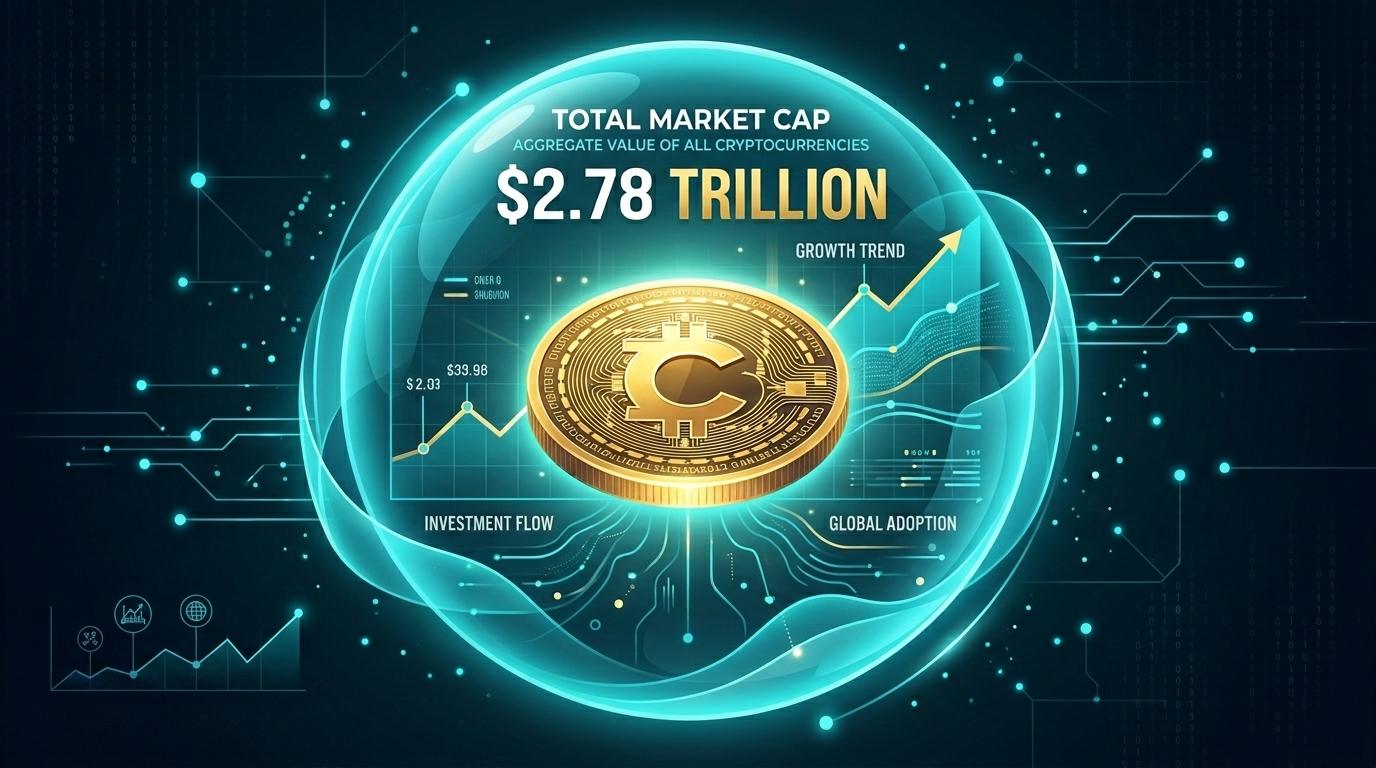
    What Is Market Cap in Crypto?

    (And Why a “Cheap” Coin Can Still Be Overpriced)

    Here’s a trap almost every beginner falls into: a coin priced at $0.0002 “looks” cheap, and a coin priced at $30 “looks” expensive — so the cheap one must have more room to grow, right?

    Wrong. Price by itself tells you almost nothing about the size of a crypto project. The number that actually matters is market cap, and once you understand it, you stop judging tokens by the sticker price on the chart and start judging them by what they’re actually worth.

    What Market Cap Actually Means

    Market capitalization (market cap) is the total value of every coin currently in circulation. It answers one specific question: if you bought every circulating coin at the current price, how much would that cost you?

    The formula is simple:

    Market Cap = Current Price × Circulating Supply

    That’s it. No hidden complexity. But that one formula is also the reason price alone is so misleading — the same market cap can be built from wildly different price-and-supply combinations.

    A Quick Example

    • Coin A: priced at $10, with 1,000,000 coins in circulation → market cap = $10,000,000
    • Coin B: priced at $0.01, with 1,000,000,000 coins in circulation → market cap = $10,000,000

    Coin A “looks” expensive. Coin B “looks” cheap. They’re identical in size. A $0.01 token with a billion coins in circulation isn’t undervalued just because the price has a lot of zeros after the decimal — it’s the same market, expressed with different math.

    Why Price Alone Is a Trap

    Beginners consistently make the same mistake: they see a low unit price and assume the coin is “early” or “has more upside” than a higher-priced coin. That logic falls apart the moment you factor in supply.

    A useful reframe: price tells you what one unit costs. Market cap tells you how big the whole project is. If you’re comparing two coins to decide which has more realistic room to grow, market cap — not price — is the number to look at.

    Circulating Supply vs. Total Supply vs. Max Supply

    Market cap is only as reliable as the supply number behind it, and there are three supply figures that get confused constantly:

    • Circulating supply — coins currently in public hands and actively tradeable. This is the number market cap actually uses.
    • Total supply — every coin that currently exists, including tokens that are locked, reserved for the team, or held in a treasury but not yet released.
    • Max supply — the hard ceiling on how many coins will ever exist (Bitcoin’s is 21 million; many tokens have no cap at all).

    If a project has 100 million coins circulating but 1 billion total supply, there’s 900 million more that could enter the market over time — diluting the value of every coin already out there. Market cap captures the picture today; it says nothing about what happens as the rest of the supply unlocks.

    Market Cap vs. Fully Diluted Valuation (FDV)

    This is where a lot of newer traders get caught off guard, especially in meme coins and fresh Solana launches.

    Fully Diluted Valuation (FDV) = Current Price × Max/Total Supply (not just circulating supply). It answers a different question: what would this project be worth if every coin that will ever exist were already in circulation?

    When circulating supply is close to max supply, market cap and FDV are close together — no red flag. But when there’s a huge gap between the two, it’s a warning sign: it means most of the supply is still locked up somewhere, and when it unlocks (team vesting, investor cliffs, staking rewards), it can quietly dilute holders who bought in early. Always check both numbers side by side before assuming a “small market cap” token is actually small.

    Market Cap Tiers: What Counts as Big or Small

    Crypto assets are commonly grouped into rough tiers by market cap. These aren’t official categories, but they’re a useful mental model for gauging risk:

    • Large-cap (roughly $10B+) — established projects like Bitcoin or Ethereum. Lower volatility, deep liquidity, slower percentage gains.
    • Mid-cap (roughly $1B–$10B) — proven projects still growing. More upside than large-caps, more risk too.
    • Small-cap (roughly $50M–$1B) — early-stage or niche projects. Real growth potential, but also real risk of stalling out or failing.
    • Micro-cap (under $50M) — this is where most meme coins and brand-new token launches live. Extremely high volatility in both directions, thin liquidity, and the highest failure rate of any tier.

    The lower you go on this list, the more due diligence matters — and the less any single metric (including market cap) should be trusted on its own.

    Market Cap vs. Volume vs. Liquidity

    Market cap tells you the theoretical value of a project. It does not tell you how easily you can actually buy or sell it. Two other numbers matter just as much:

    • Volume — how much of the token has actually traded in the last 24 hours. Healthy volume is usually a small percentage of market cap. Volume that’s unusually high relative to market cap can signal manipulation or a short-term hype spike; volume that’s far too low signals a token nobody can exit.
    • Liquidity — how much capital sits in the trading pool backing the token. A token can have a large market cap on paper and still have shallow liquidity, meaning a relatively small sell order can crash the price. Market cap is a valuation; liquidity is whether that valuation is actually backed by real, exitable money.

    A high market cap with weak volume and thin liquidity is one of the classic setups behind a token that looks solid on the surface but is genuinely hard to sell without moving the price against yourself.

    The Meme Coin Wrinkle: Why a Fresh Launch’s Market Cap Can Lie to You

    If you’re trading fresh Solana meme coin launches, this is the part that matters most. In the first minutes after a token launches, the displayed market cap is technically accurate — price times circulating supply — but it can be almost meaningless as a signal of real demand.

    Here’s why: on brand-new launches, a large share of that early “circulating supply” can be sitting in a small number of wallets that bought within seconds of creation (see our breakdown of sniper wallets for how that happens). A rising market cap in that window can reflect a handful of bots repositioning, not organic buyer demand. That’s part of why a token can print an eye-catching market cap number and still collapse minutes later — the number was real, but the demand behind it wasn’t durable.

    The practical takeaway: on anything younger than a few minutes old, treat market cap as one data point, not a verdict. Pair it with holder concentration, how distributed the early buys are, and whether liquidity is actually locked before reading the market cap number as a sign of legitimacy.

    Where to Check Market Cap

    For established coins, CoinGecko and CoinMarketCap are the standard references — both show live price, market cap, FDV, circulating/total/max supply, and volume side by side. For brand-new Solana launches that haven’t been indexed yet, tools like DexScreener, DexTools, or launch trackers like Axiom show real-time market cap pulled directly from the liquidity pool, which is usually the only place to see the number in the first few minutes of a token’s life.

    Quick Takeaways

    • Market cap = price × circulating supply. It’s a project’s total value, not its per-coin price.
    • A low price does not mean a coin is cheap or early — always check market cap before comparing tokens.
    • Circulating, total, and max supply are three different numbers; market cap only uses circulating supply.
    • FDV shows what a project would be worth if all tokens were unlocked — a big gap between market cap and FDV is a dilution risk.
    • Market cap tiers (large/mid/small/micro-cap) are a rough guide to risk level, not a guarantee of anything.
    • Market cap without healthy volume and real liquidity can be a paper number you can’t actually exit at.
    • On fresh meme coin launches, treat early market cap as one signal among several — not proof a token is legitimate.

    This article is for educational purposes only and is not financial advice. Always do your own research before trading or investing in cryptocurrency.

  • What Is a “Sniper” in Meme Coin Trading?

    What Is a “Sniper” in Meme Coin Trading?

    cryptochris trades with terminal banner

    The Core Mechanic


    Two Flavors of Sniping

    the meaning of snipers in crypto traing - cryptochris blog

    Why Sniper Concentration Is a Red Flag

    solfarmer banner 1

    How to Actually Screen for It

    The Bottom Line