(And Why It Should Change How You Screen Tokens)
Difficulty: Beginner | Tags: Pump.fun, Holder Analysis, Risk Screening, Solana, Due Diligence
If you’ve ever pulled up the holder list on a token that’s less than a minute old and seen the same handful of wallets sitting on 20-40% of supply, you’ve already met a sniper. You just didn’t know the name for it yet.
Snipers are one of the most common — and most misunderstood — risk factors in fresh meme coin launches. Understanding how they work is a prerequisite for reading a chart correctly, because a lot of what looks like a “rug” is actually just sniper behavior playing out in public.
The Core Mechanic
When a token launches — on Pump.fun, or via a new liquidity pool on Raydium — there’s a razor-thin window where the token exists but almost nobody has seen it yet. Snipers exist to exploit exactly that window.
Here’s what’s actually happening under the hood:
- Bots monitor the chain in real time, watching for new mint or new-pair events as they hit the mempool.
- The instant a token or liquidity pool is created, the bot fires off a buy transaction automatically — no human involved.
- The fastest bots land in the same block as the token’s creation, meaning they own tokens before a human could have even opened the chart.
That’s why on a token that’s 10 seconds old, the “first buyers” you see aren’t lucky degens who happened to be scrolling Pump.fun at the right moment. They’re bots that were already waiting.
Play Games and Earn Crypto

Two Flavors of Sniping
Bot Snipers
The dominant form. These run on dedicated sniper software wired directly to low-latency RPC nodes, competing on speed and priority fees the same way high-frequency trading firms compete in traditional markets. This is a genuine technical arms race — better infrastructure wins.
Manual Sniping
The human version: a trader watching a live launch feed (Axiom’s Pulse feed is a common one) and clicking buy as fast as possible. It’s slower than any bot by orders of magnitude, but it’s still colloquially called “sniping” in community slang, and it’s how a lot of retail traders describe their own early entries.
Why Sniper Concentration Is a Red Flag
This is the part that actually matters for your trading decisions.
A wallet that snipes a token isn’t trying to be an early believer in the project — it’s trying to buy at a price so low that almost any amount of upward movement is profitable. That means:
- Snipers have no loyalty to the chart. They’re sitting on a massive unrealized gain within seconds, and their only objective is to realize it.
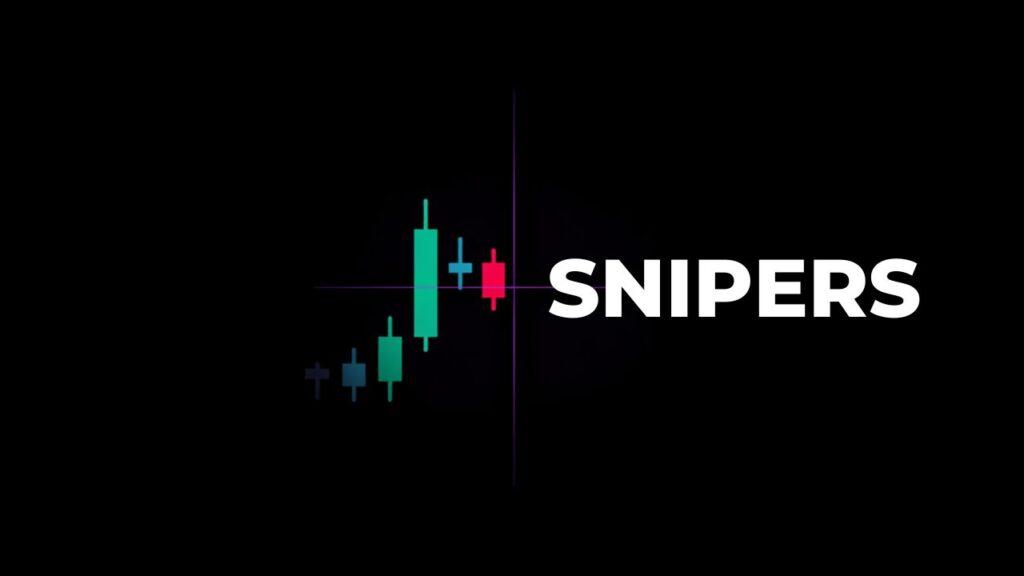
- When a token starts pumping and attracting real buyers, snipers sell into that demand simultaneously. This produces the classic sharp-pump-then-hard-drop candle — the shape everyone associates with a “rug” — even when the developer never touched the liquidity and nothing was actually rugged.
- High sniper concentration compounds with other risks. A token with heavy sniper ownership and thin liquidity and a low migration threshold is a much worse setup than a token with any one of those factors alone.
| KEY TAKEAWAY Sniper concentration tells you that a meaningful chunk of supply is held by wallets with zero interest in the token’s future — only in the speed of their exit. |
How to Actually Screen for It
This is a natural extension of the four-check framework — it lives inside the holder wallets check, but it deserves its own line item because it behaves differently from generic whale concentration.
What to look for:
- Timing of first transaction. Wallets whose first buy landed within the first 5-15 seconds of pool creation are very likely bots, not organic buyers.
- Concentration among those early wallets. If the top 5-10 earliest buyers collectively hold a large percentage of supply, that’s a much bigger risk than the same percentage spread across dozens of wallets.
- Whether those wallets have already sold. A sniper wallet still holding is a dump risk still ahead of you. A sniper wallet that’s already sold is a signal that at least one wave of sell pressure has already cleared.
- Bundled buys. Some snipers execute through bundled transactions (multiple wallets buying in the same block, often controlled by one entity). This is functionally the same risk as a single concentrated wallet, just disguised across addresses. RugCheck typically flags this separately from raw holder concentration — treat it as an additive risk, not a substitute check.
What this means practically, using your existing dip-and-recovery approach: if you’re entering on a dip, you want to know whether that dip is organic profit-taking or a coordinated sniper exit. The former can resolve into a clean recovery. The latter often has more supply still waiting to be sold above the current price, which caps how far a recovery can realistically run before it meets resistance from wallets that never intended to hold.
The Bottom Line
You are never competing with snipers directly — by the time you can see a token and evaluate it, that race is already over. What you’re actually managing is the consequences of sniper activity: concentrated supply sitting above the market, waiting to exit into whatever demand shows up next.
Treat high sniper concentration the same way you’d treat any other structural red flag — not as an automatic skip, but as a reason to size down, tighten your exit plan, and stay honest with yourself about how much of the “recovery” you’re seeing is real demand versus the tail end of someone else’s exit.
This post is part of the CryptoChris Knowledge Base — practical, no-fluff breakdowns of the mechanics behind meme coin trading. Not financial advice; always do your own research.
Leave a Reply