Loading live prices…

Tag: Solana

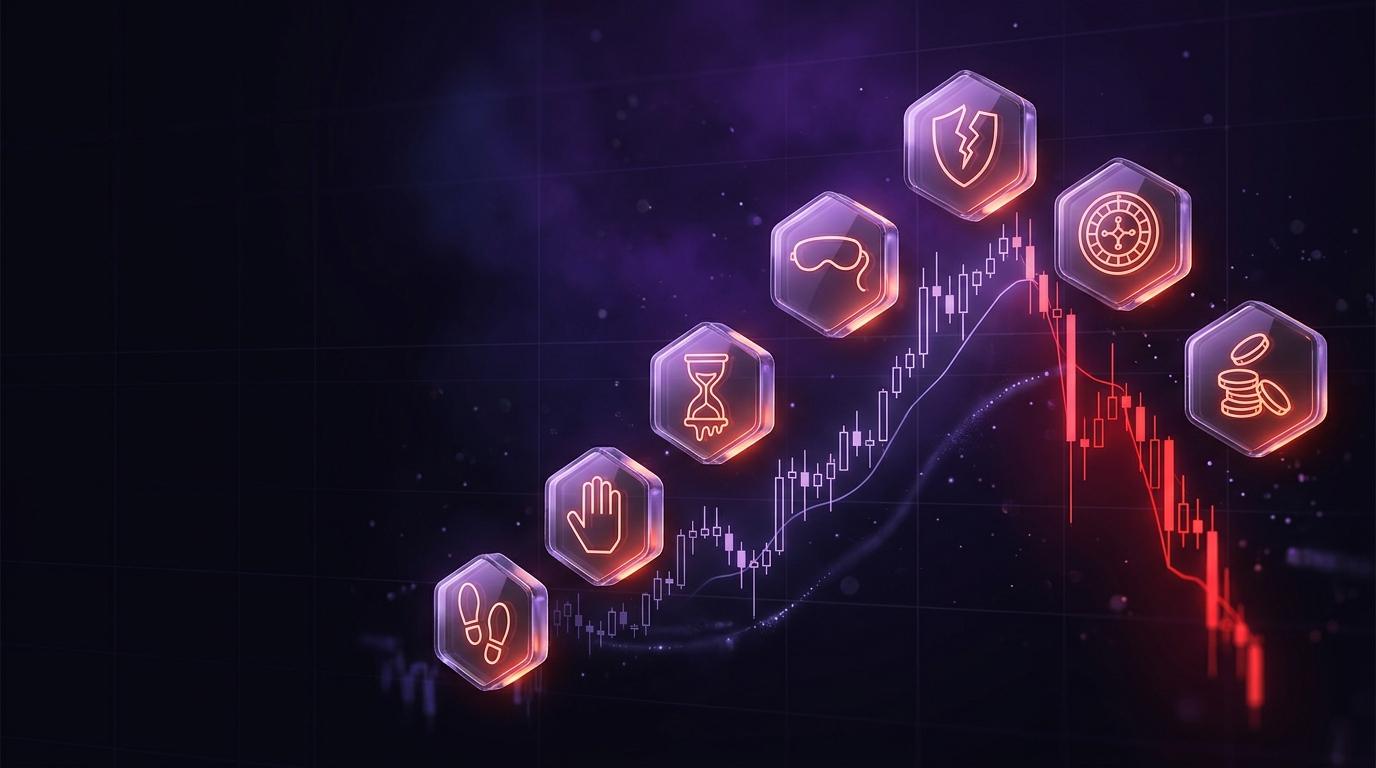
  • 7 Things You Should Avoid If You’re Trading Memecoins

    7 Things You Should Avoid If You’re Trading Memecoins

    Here’s an uncomfortable truth I wish someone had told me when I started: most people who say they “trade” meme coins are really just pulling a slot machine lever with extra steps. They don’t know it, and that’s the dangerous part.

    I’ve been in crypto for five years now, and the mistakes that cost beginners the most money aren’t exotic. They’re the same seven habits, over and over. I see them in my DMs, in comment sections, and honestly, I’ve made every single one of them myself at some point.

    This post was sparked by a video from Insentos on YouTube, which nails the list of things new traders should stop doing. I agree with all seven points, so I’ve taken them and added my own take on each one, plus the tools and checks I actually use on Solana.

    You can check the video here :

    If you’re new, read this before your next trade. If you’ve been at it a while, I’d bet at least one of these still stings.

    1. Stop Blindly Copy Trading

    You open a leaderboard, find a wallet that’s up six figures this month, and decide the smart move is to mirror every buy it makes. I get the appeal. It feels like a shortcut.

    It isn’t.

    What the leaderboard doesn’t show you is how those traders actually make money. Many of the top wallets are taking a huge number of trades, and a big chunk of those trades lose. Their results come from a small handful of massive winners that pay for all the losers. When you copy them, you have no idea which trade is the one that’s going to carry the month. You’re far more likely to catch ten of their small losses than the one big win. And because you’re always a few seconds late, you’re often buying their entries at a worse price, which can make you part of their exit.

    That doesn’t mean ignore good traders. It means use them for information, not instructions. I follow a lot of wallets, but I’m watching them to understand what’s trending, which narratives are heating up, and where the smart money is rotating. Then I make my own call.

    If you want to do this properly, I broke down my process in How to Track Wallets to Get an Edge in Meme Coin Trading. The same logic applies to influencer calls, which I covered in KOLs in Meme Coin Trading.
    cryptochris trades with terminal banner

    2. Stop Trusting People You Meet in Crypto

    Scroll through the comments under any crypto video and you’ll find the same messages: “DM me for the insider group.” “Join our private calls channel.” “We know which coins are getting pumped tomorrow.”

    Every one of these is a scam. Not most. All of them.

    It doesn’t matter if your wallet holds $50 or $50,000. You’re holding something everyone wants, and some people in this space are very, very good at taking it. The playbook usually looks like one of these:

    • Social engineering: they build trust over days or weeks, then ask you to “send a little to verify” or “invest in a private round.”
    • Malicious downloads: a “trading bot,” a “beta tool,” or a PDF that quietly drains your wallet the moment you run it.
    • Coordinated rugs: the “insider group” is the exit liquidity. You are the plan.

    A few rules I live by:

    • Nobody legitimate DMs you first offering money.
    • Never download software someone sends you, no matter how polished it looks.
    • Never share your seed phrase or private key. Ever. There’s no exception.
    • Never sign a transaction from a link you didn’t go looking for yourself.
    • Always verify a token’s contract address from the official source before you buy, because fake tickers with copycat names are everywhere.

    And yes, that includes anyone claiming to be me. If you get a DM from “CryptoChris” offering a group or a deal, it isn’t me.

    3. You’re Not Selling Enough

    This one hurts because it’s so avoidable.

    You catch a coin early. It runs. You’re up 4x, then 6x. You screenshot it, send it to your friends, maybe post it. Two hours later it’s back where you bought it, or worse.

    Here’s the thing to burn into your brain: you haven’t made money until you sell. A number on a screen isn’t profit. It’s a possibility.

    When I was newer, I became almost obsessed with taking profit, and that habit did more to grow my account than any single great entry ever did. You’re probably not going to hit one coin that changes your life. What actually builds a portfolio is taking consistent, guaranteed wins again and again.

    A few habits that help:

    • Take your initial out early. Once a coin doubles, selling your starting amount means the rest is playing with house money.
    • Scale out in pieces. You don’t have to nail the top. Selling in chunks on the way up removes the pressure.
    • Use the screenshot rule. If you’re excited enough to screenshot the gain or celebrate it, that’s usually a sign you’re already up an amount you’d be happy with. Sell some.

    Also remember that selling isn’t always instant at the price you see. On thin tokens, a big sell can move the price against you, so it’s worth understanding slippage and price impact and checking a coin’s liquidity pool before you size in.
    solfarmer banner 1

    4. Stop Buying Tokens Blind

    “The chart looks good.” “The meme is hilarious.” “Some big wallet just bought it.”

    None of these is a reason to buy. If that’s your whole thesis, you’re not trading, you’re gambling, and you’d honestly get the same result depositing into an online casino.

    The entire point of learning to trade meme coins is to build some kind of edge. That means checking a few things before you click buy. My quick pre-buy checklist on Solana looks like this:

    None of this guarantees a winner. Nothing does. But it filters out a lot of obvious losers, and in this game, avoiding bad trades is half the battle.

    5. Learn Risk Management (Before You Need It)

    The number of people who wipe out their entire account in the first day, week, or month of trading is genuinely shocking. And almost every time, the problem isn’t that they picked bad coins. It’s that they bet way too much on each one.

    The real goal of meme coin trading is simple: stay alive. This market never closes. It runs 24 hours a day, 7 days a week, and new opportunities show up constantly. If you’re still in the game, you get to take advantage of them. If you blew your account on day one, you don’t.

    A few principles that keep me in the game:

    • Don’t trade in week one. Seriously. Spend your first days learning how the tools work, watching charts, and paper trading in your head. The market will still be here.
    • Size small. A common rule of thumb is to risk only a small slice of your account per trade, something like 5 to 10 percent. If you start with $100, that’s $5 to $10 per trade, not $50 and definitely not the whole thing.
    • Keep dry powder. One of the saddest things I see is people who can actually spot a good coin, but they’re already out of money when it launches because they burned everything on the last five bad ones.

    Protecting your capital isn’t the boring part of trading. It is trading.

    6. Stop Overtrading

    On Solana, thousands of new tokens can launch in a single hour. Every one of them looks like it might be the next big one. That’s exactly what makes overtrading so easy to fall into. It’s shiny object syndrome on steroids.

    I spend a lot of hours in front of the charts, and I still only take a small number of trades on a typical day. Being at your screen all day doesn’t mean you need to be clicking buy all day. Most of the time, the best trade is no trade.

    Overtrading usually shows up in two forms:

    • Boredom trading: you’re at your desk, nothing’s happening, so you force something.
    • Revenge trading: you just took a loss, you’re annoyed, and you jump into the next coin to “win it back.” This one is a portfolio killer, and I wrote a whole post on it: Revenge Trading in Crypto: Why Chasing Your Losses Makes It Worse.

    I’m not immune. I’ve had days where a bad loss got under my skin and I started chasing. The difference between traders who last and traders who don’t isn’t that one group never makes mistakes. It’s that they recognize the pattern and stop before it gets expensive.

    There will always be another coin. Always. Wait for one that actually passes your checklist. And if you want to be more selective about when you trade, Best Days and Times to Trade Meme Coins is a good place to start.

    7. Don’t Let One Big Win Rewrite Your Rules

    This is the mistake that catches traders who are actually starting to do well.

    You hit a big one. Maybe it’s $1,000, maybe it’s $10,000. Suddenly you feel like you’ve cracked it, and the logical next step seems to be throwing all of that profit into the next coin to grow it even faster.

    That’s how people give it all back.

    The strategy and risk management that got you the win are the same ones you should keep using after the win. If you were sizing at 5 percent before, you keep sizing at 5 percent. Your position size should grow slowly because your account grew, not jump because you feel unstoppable.

    The same applies if you start with a bigger bankroll than most people. Having more money doesn’t mean you should put all of it at risk. Trade with an amount you could genuinely lose without it affecting your life.

    One thing that helps me: after a big win, I move a chunk of the profit out of my trading wallet. Out of sight, out of reach, and much harder to “accidentally” throw into the next impulse buy.

    The Bottom Line

    Meme coin trading is a marathon, not a sprint. The people who make it aren’t the ones who hit one lucky coin. They’re the ones who are still around a year later, because they avoided the mistakes that knock everyone else out.

    Quick recap. If you’re trading meme coins, avoid:

    1. Blindly copy trading other wallets
    2. Trusting strangers who DM you with “opportunities”
    3. Holding forever instead of taking profit
    4. Buying tokens with zero research
    5. Trading without risk management
    6. Overtrading and revenge trading
    7. Letting one big win blow up your strategy

    Cut these out and you remove a huge amount of the gambling from your trading. You’ll still take losses, everyone does, but you’ll be around for the wins.

    If you’re just getting started, browse the rest of the CryptoChris Knowledge Base for the fundamentals behind every check I mentioned above.

    FAQ

    Is meme coin trading just gambling? It can be, and for most beginners it is. The difference between gambling and trading is having a repeatable process: checking holders, liquidity, volume and narrative before buying, sizing small, and taking profit. Without that, it’s a casino.

    How much should a beginner risk per meme coin trade? Many traders use a small fixed percentage of their account per trade, often in the 5 to 10 percent range or less. The exact number matters less than being consistent and never risking an amount you can’t afford to lose.

    Should I copy trade successful meme coin wallets? Blindly copying is a common way to lose money, because top wallets often take many losing trades and rely on a few big winners. Tracking wallets is useful for spotting trends and narratives, but your buy and sell decisions should be your own.


    Disclaimer: This article is for educational purposes only and is not financial advice. Meme coins are extremely volatile and high risk, and you can lose all of the money you put in. Always do your own research and never invest more than you can afford to lose.

  • What Is a Liquidity Pool? How to Check Locked Liquidity Before You Buy

    What Is a Liquidity Pool? How to Check Locked Liquidity Before You Buy

    You’ve checked the market cap, counted top holders, and priced in slippage before you buy — but none of those numbers mean much if the pool underneath the token is thin, unlocked, or one transaction away from being pulled out from under you. The liquidity pool is the plumbing that makes every one of those other checks possible, and it’s worth understanding on its own before your next trade.

    What Is a Liquidity Pool?

    A liquidity pool is a pair of tokens — usually SOL and the meme coin — deposited into a smart contract on a decentralized exchange like Raydium, Orca, or Meteora. There’s no traditional order book matching buyers to sellers. Instead, an automated market maker (AMM) sets the price based on the ratio of the two tokens sitting in the pool.

    When you buy, you add SOL to the pool and pull the meme coin out, shifting that ratio and pushing the price up. When you sell, it works in reverse. Anyone can deposit tokens into a pool as a “liquidity provider” and earn a cut of trading fees in return — they receive LP tokens as a receipt representing their share of the pool.

    cryptochris trades with terminal banner

    Why Liquidity Depth Determines Everything Else You’ve Learned

    A low market cap already told you the float was small. Heavy top holder concentration told you a whale exit could hit hard. Both of those risks run through the same bottleneck: the liquidity pool. A shallow pool is exactly what turns a single large sell into a violent price crash, and it’s exactly what makes your own buy order move the price before your trade even finishes — the price impact you check before confirming a swap. Liquidity depth is the foundation the other checks are built on.

    Locked vs. Burned Liquidity — What’s the Difference

    • Unlocked liquidity — the dev or team wallet holds the LP tokens and can withdraw the pool’s contents at any time. This is the classic rug pull setup: pull the liquidity, the token becomes worthless and unsellable, and the team walks away with the paired SOL.
    • Locked liquidity — the LP tokens are deposited into a time-locked vesting contract for a set period. It’s better than nothing, but the protection has an expiry date. A lock that’s about to end offers no more protection than no lock at all.
    • Burned liquidity — the LP tokens are sent to a dead address and destroyed permanently. No one — not even the original team — can ever withdraw the pool again. This is the strongest signal available. On Solana, this is commonly done through Raydium’s built-in “Burn & Earn” feature, which permanently locks the position while the creator still collects trading fees going forward.

    How to Check If Liquidity Is Locked on a Solana Token

    1. Pull the token up on a DEX analytics tool. Dexscreener, Birdeye, and GMGN all surface a liquidity lock or burn indicator directly on the pair page — this is the fastest first check.
    2. Run it through a dedicated safety scanner. RugCheck.xyz specifically checks LP burn percentage as part of its risk score and will flag unlocked or partially unlocked pools.
    3. Verify manually if you want to trust no one. Pull up the LP token’s mint account on Solscan and check whether the supply was sent to a known burn address rather than sitting in a wallet the team controls.
    4. If it’s locked rather than burned, check the unlock date. A lock expiring next week protects you today but tells you nothing about next month.

    The Liquidity-to-Market-Cap Ratio: A Fast Health Check

    Compare the dollar value of the liquidity pool to the token’s market cap. As a rough rule of thumb, many traders look for a ratio of at least 10–15%. A token with a $1M market cap and $150K in liquidity is relatively healthy. A token with a $1M market cap and $5K in liquidity is a glass house — one moderately sized sell can shatter the price. This ratio is a fast sanity check to run alongside the market cap number you already know how to read.

    Red Flags to Watch For

    • No burn and no lock showing on the pair page — often labeled directly as “0% locked.”
    • A large chunk of liquidity removed shortly after launch, visible in real time on trackers as a liquidity-pull event.
    • Liquidity that looks fine in dollar terms but is tiny relative to market cap.
    • Liquidity-providing wallets overlapping with the same wallets flagged as top holders — a sign the “distributed” supply and the liquidity are controlled by the same hands.

    Quick Checklist

    • Confirm liquidity is burned or time-locked — verify it yourself, don’t take the project’s word for it.
    • Check the liquidity-to-market-cap ratio; treat well under 10% as thin.
    • Scan for any large liquidity removals since launch.
    • If it’s locked rather than burned, note the unlock date and revisit before it passes.

    FAQ

    Is locked liquidity 100% safe? No. A lock delays the specific risk of the LP being pulled — it doesn’t remove other exit paths, like retained mint authority or hidden transfer taxes. Treat locked or burned liquidity as one check among several, not a guarantee.

    What’s the real difference between locking and burning? A lock is temporary and reversible once it expires; a burn is permanent and irreversible from the moment it happens. Burned liquidity is the stronger signal.

    Where can I check liquidity lock status for a Solana token? Dexscreener, Birdeye, and GMGN show it directly on the pair page. RugCheck.xyz gives a dedicated risk score built around it. Solscan lets you verify manually by checking the LP token’s mint account.

    What counts as “thin” liquidity? There’s no official cutoff, but a liquidity-to-market-cap ratio well under 10% is generally treated as thin enough that even moderate trades can swing the price sharply.


    Related in this series


    This article is for educational purposes only and is not financial advice. Meme coin trading carries significant risk, including total loss of funds. Always do your own research (DYOR) before buying any token.

  • Slippage and Price Impact: Why Your Buy Order Didn’t Go the Way You Expected

    Slippage and Price Impact: Why Your Buy Order Didn’t Go the Way You Expected

    You hit buy at one price and the confirmation shows something worse — fewer tokens than you expected, or a warning you clicked past without reading. That gap has two separate causes hiding behind it: slippage and price impact. They get lumped together constantly, but understanding the difference is what lets you actually control your entry price instead of guessing.

    What Is Slippage?

    Slippage is the difference between the price you were quoted the moment you submitted a trade and the price your trade actually executed at. Between clicking “swap” and your transaction confirming on-chain, other trades can go through first and shift the price. On a fast, congested chain, even a few hundred milliseconds of delay is enough for the market to move against you.

    This is why every DEX swap interface has a slippage tolerance setting — it’s the maximum price movement you’re willing to accept before the trade cancels itself rather than execute at a worse price than you agreed to.

    What Is Price Impact?

    Price impact is a different mechanic, even though it shows up in the same swap window and produces the same annoying result: fewer tokens than you expected. Price impact is caused by your own trade moving the price, because you’re buying against a shallow liquidity pool. The bigger your order relative to the pool’s depth, the more the price shifts against you as your own trade executes — with no other traders involved at all.

    In other words: slippage is the market moving on you while you wait. Price impact is you moving the market yourself.

    Why Meme Coins Are Especially Prone to Both

    Meme coins combine the two worst ingredients for this problem: thin liquidity and sudden bursts of volume. A token with a small liquidity pool has almost no cushion, so a single sizeable buy can swing the price double digits on its own — that’s price impact. Layer on a launch-day frenzy where dozens of buyers are competing for the same block, and the price a few seconds after you hit submit can already look nothing like the price you saw — that’s slippage.

    Both problems trace back to the same root cause you’re already screening for: shallow float and low liquidity. A token can look cheap and exciting on the chart while being nearly impossible to enter or exit cleanly.

    How to Read the Price Impact Warning Before You Swap

    Most Solana swap interfaces — Jupiter, Raydium, and pump.fun’s own swap UI — show a price impact percentage before you confirm the trade. Treat it as a direct readout of how much room the pool actually has:

    • Under 1% — negligible, the pool can easily absorb your order size.
    • 1–5% — noticeable cost, worth checking whether a smaller size would help.
    • Above 5% — a common warning threshold; your order is likely too large for the pool’s current depth, and you’re paying a real premium to get filled.

    If you see a double-digit price impact warning, that’s the swap interface telling you plainly that the liquidity isn’t there to support your trade size — not a glitch to click past.

    Setting Slippage Tolerance Without Overpaying

    Slippage tolerance is a trade-off, not a “set it and forget it” number. Set it too low on a volatile token and your transaction fails outright — and you still pay the gas fee, because the network did the work of attempting it. Set it too high and you’re exposed: bots that watch pending transactions can front-run a generous slippage setting and fill your order at close to the worst price you’d accept.

    • Tight, high-liquidity pairs: roughly 0.5–1% is usually enough.
    • Established meme coins with decent volume: roughly 1–3% is a common range.
    • Brand-new or nano-cap launches: traders often need 5–15% just to get a transaction to confirm at all, given how fast the price is moving.

    The higher the slippage tolerance a token needs, the more that’s telling you about how thin and volatile its liquidity really is — treat a high required tolerance as a risk signal in itself, not just a setting to crank up.

    Splitting Orders to Reduce Price Impact

    If you’re sizing into a position on a thin pool, breaking one large buy into two or three smaller trades usually reduces your average price impact compared to a single large swap, since each individual trade is smaller relative to the pool. It costs a bit more in gas and takes a little longer, but on a shallow pool it can meaningfully improve your average entry.

    How This Ties Into Your Screening Routine

    Price impact is where everything else you’ve checked shows up in real numbers. A low market cap with a small float already told you liquidity was likely thin. Heavy top holder concentration told you a whale exit could move the pool violently. Watching for sniper wallets told you launch-window volume would likely be chaotic. The price impact number on your swap screen is those risks finally showing up as a concrete cost, right before you confirm the trade — which makes it your last, and most direct, checkpoint.

    Quick Checklist

    • Read the price impact percentage before confirming — treat anything above ~5% as a size-down signal.
    • Match your slippage tolerance to the token’s actual volatility, not a default you never change.
    • Split large buys into smaller trades on thin pools instead of one big swap.
    • Re-check price impact if you’re trading in the first minutes after a launch or during a volume spike.

    FAQ

    What’s the difference between slippage and price impact?

    Price impact is caused by your own trade moving a shallow pool — it happens even if you’re the only person trading. Slippage is the gap between the quoted price and the executed price, mostly caused by market movement or network delay while your transaction is pending. They often show up together, but they come from different causes.

    What slippage tolerance should I use for meme coins?

    There’s no fixed number, but many traders use roughly 1–3% for meme coins with established volume, and 5–15% for brand-new or nano-cap launches where the price is moving fast enough that lower settings cause failed transactions.

    Why did my transaction fail even though I paid gas?

    Almost always because your slippage tolerance was too low for how fast the price was moving — the price shifted past your accepted limit before the trade confirmed, so the contract rejected it. The network still did the computational work to attempt the trade, so the gas fee isn’t refunded.

    What price impact percentage is too high?

    There’s no official cutoff, but many traders treat a price impact above roughly 5% as a sign the order size is too large for the pool’s current depth, and consider splitting the trade or reducing size instead.

    Related in this series
    What Is Market Cap in Crypto?
    Top Holder Concentration: How to Spot a Whale-Controlled Token What Is a “Sniper” in Meme Coin Trading?